
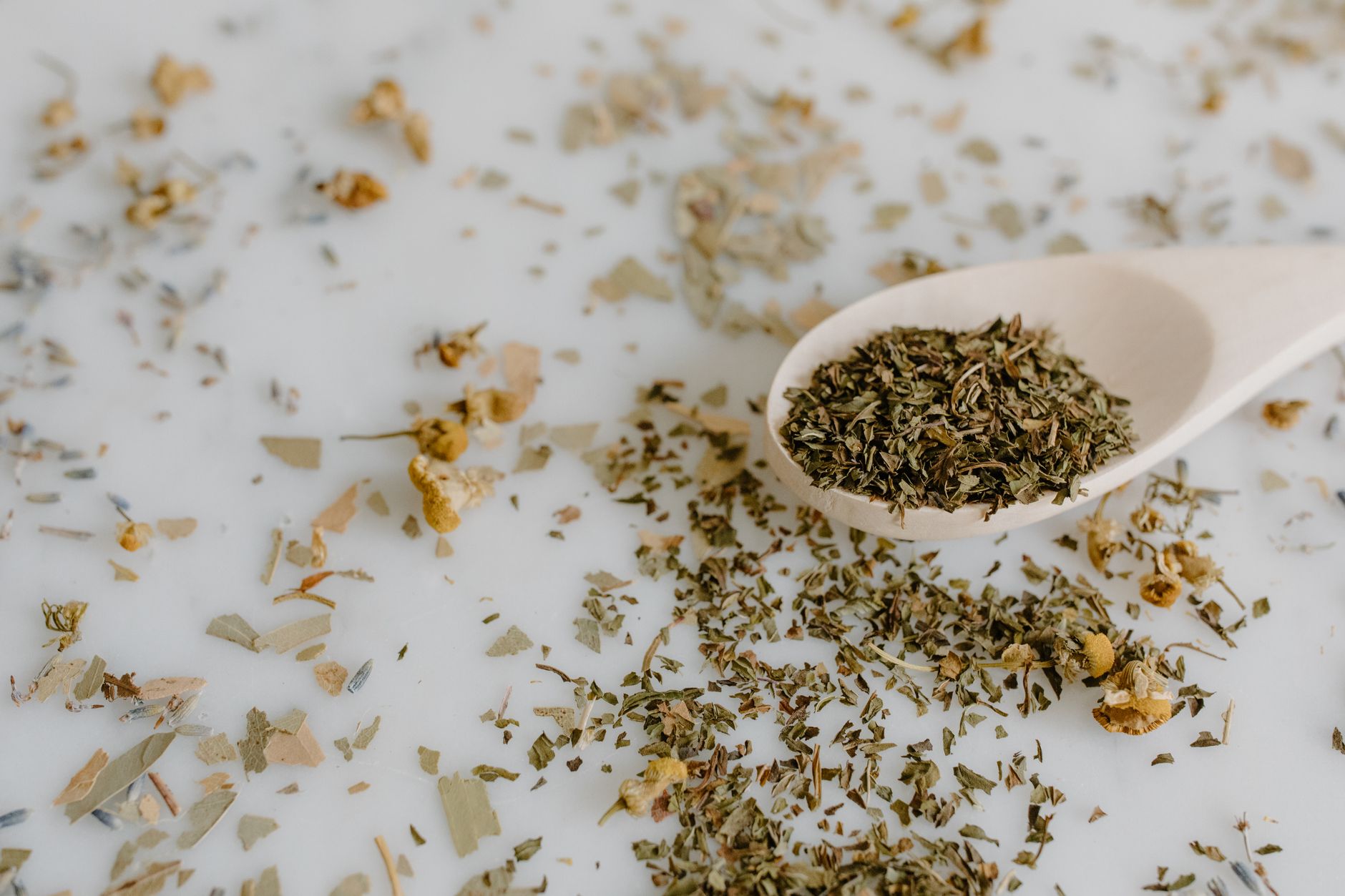
Digestive herbs traditionally support digestion after a meal, especially when a feeling of heaviness, bloating or gas appears. Peppermint, fennel, chamomile and ginger are among the most commonly cited, each associated with a different traditional use. This guide presents the main digestive herbs, their respective uses, the forms in which they are found and the precautions to know before adding them to a routine.
Digestive herbs: a comparison of traditional uses
| Herb | Traditional use | Common form |
|---|---|---|
| Peppermint | Bloating, heavy feeling | Infusion, essential oil |
| Fennel | Gas, spasms after a meal | Seed infusion |
| Chamomile | Cramps, nervous digestion | Flower infusion |
| Ginger | Slow digestion, nausea | Infusion, fresh root |
| Aniseed | Bloating, intestinal comfort | Seed infusion |
| Lemon balm | Stress-related digestive spasms | Leaf infusion |
Peppermint, for a feeling of lightness after a meal
Peppermint is one of the most widely used digestive herbs in Europe. Its leaves contain menthol, a compound traditionally credited with a soothing action on the muscles of the digestive system, which explains why it is so often linked with the feeling of bloating and heaviness after a meal.
It is most commonly taken as an infusion, made from dried leaves, ideally between meals rather than immediately after them. Peppermint essential oil also exists, but it requires particular precautions and is not suitable for everyone, including young children and pregnant women.
Fennel, a herb traditionally linked to gas and spasms
Fennel seeds are among the oldest known carminative herbs, meaning they are traditionally associated with reducing intestinal gas. Their use dates back to several Mediterranean civilisations, where they already accompanied heavy meals.
As an infusion, lightly crushed fennel seeds release their aromatic compounds. This herb is also sometimes chewed directly as whole seeds after a meal, a traditional practice still observed in some cultures. Fennel is generally well tolerated, including with regular use.
Chamomile, for cramps and stress-related digestion
Chamomile stands out among digestive herbs for its dual effect, traditionally reported on both the digestive system and nervous relaxation. It is often chosen when digestive discomfort seems linked to a period of tension or stress.
Its dried flowers infuse easily, and their slightly sweet taste makes chamomile a digestive herb appreciated in the evening. It is frequently recommended alongside a tea taken after dinner, particularly for people prone to stomach cramps.
Ginger, to support slow digestion
Ginger holds a particular place among digestive herbs: its root is traditionally linked to stimulating digestion and to a soothing effect in case of nausea. This reputation rests on long-standing use in several Asian traditions.
It is consumed fresh, grated into an infusion, or dried as a ready-to-use tea. Its spicy taste sets it apart from milder digestive herbs such as chamomile, making it a choice to adapt according to personal taste.
Other herbs traditionally used for digestive comfort
Beyond the four herbs above, several others regularly appear in habits linked to digestive comfort. Aniseed, close to fennel through its aromatic seeds, is traditionally associated with bloating. Lemon balm, whose leaves carry a lemony scent, is more often linked to digestive spasms related to a period of nervous tension.
Artichoke, for its part, is more closely associated with liver comfort than with immediate digestion: its leaves are found in many traditional preparations meant to support liver function after rich meals. Activated charcoal, although not strictly a plant in the common botanical sense, is also mentioned in habits linked to intestinal gas.
Star anise, distinct from aniseed despite the similar name, is sometimes added to digestive blends for its warm, aromatic profile, often alongside cinnamon or ginger in autumn and winter infusions. Rosemary, more commonly associated with cooking, is also traditionally credited with supporting the comfort of the digestive system when taken as an infusion after a rich or fatty meal. These additional herbs are generally used in combination with the main ones presented above, rather than on their own, as part of a broader routine built around the season and personal taste.
How to work digestive herbs into daily life
Infusion remains the most widespread way to use digestive herbs: dried leaves, flowers or seeds are steeped in hot water for a few minutes before being drunk, most often after a meal. This simplicity largely explains why this form remains more popular than other preparations.
Mother tinctures and capsules are alternatives for those who want a more concentrated or more portable form. These are generally found in pharmacies or specialised shops, where a professional can help choose the preparation best suited to each situation.
Some people combine several digestive herbs in the same infusion, for example peppermint and fennel, to bring together their respective traditional uses. This practice remains common, provided attention is paid to the precautions specific to each herb in the blend.
The time of consumption also plays a role in the traditional use of these herbs. An infusion taken at the end of a meal, rather than in the middle of it, allows the digestive process to get underway before the herb is introduced. Some people instead prefer an infusion around twenty minutes after the meal ends, once a feeling of heaviness starts to appear. There is no single rule: the habit is mostly built through observing what works best for each person, meal after meal.
The quality of the herbs used also deserves attention: leaves, flowers or seeds from organic farming, stored away from light and moisture, keep their aromatic properties better over time. A digestive herb that is too old or poorly stored loses some of its interest, even though it remains safe to consume.
Precautions to know before using digestive herbs
Digestive herbs, even when used traditionally for a long time, are not suitable in every situation. Peppermint, for example, is not recommended in case of gastro-oesophageal reflux, as it can relax the sphincter separating the stomach from the oesophagus. Several herbs in this family should also be avoided, or used with caution, during pregnancy and breastfeeding.
An interaction with an ongoing medical treatment remains possible for some digestive herbs, particularly with repeated use. It is therefore recommended to check with a pharmacist or healthcare professional before adding a new herb to a routine, especially when taking regular medication. When digestive discomfort persists or worsens despite these traditional uses, a medical consultation helps identify its cause rather than letting the discomfort continue.
Young children call for particular care: several digestive herbs, including peppermint essential oil, are not recommended below a certain age, and a pharmacist’s advice remains the best source for adapting use to a young child. Similarly, a known allergy to a herb from the same botanical family (such as asteraceae for chamomile) calls for extra caution before any first use, ideally starting with a small amount.
To go further, natural remedies for acid reflux and how to reduce bloating naturally cover specific digestive issues that several of these herbs are associated with. The liver detox cure complements these insights from the liver comfort angle, while the guide to the best natural antioxidant broadens the perspective to the wider benefits of plants on the body.