
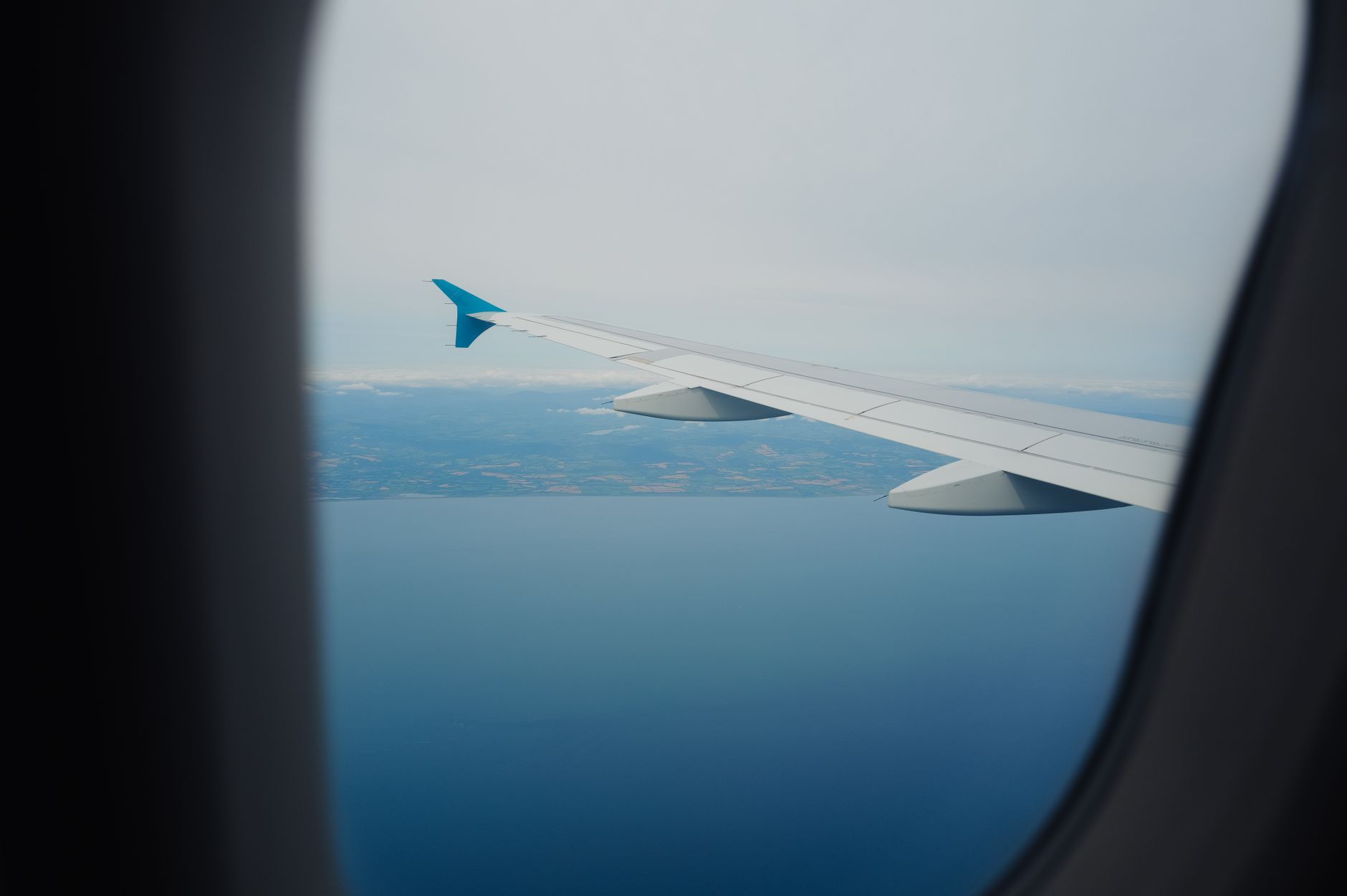
Flight stress, sometimes called fear of flying or aviophobia, affects a share of travellers to very different degrees, from simple apprehension at take-off to more pronounced anxiety throughout the flight. Between preparation habits, natural solutions such as Bach flowers or essential oils, and breathing techniques, several approaches exist to help a flight feel calmer. This guide presents the most commonly mentioned causes, the symptoms to recognise and the most widespread natural solutions to support a flight.
Natural solutions against flight stress: a comparison
| Solution | Type of approach | When to use |
|---|---|---|
| Bach flowers | Emotional support | Before the flight and during the journey |
| Essential oils | Scent-based, by inhalation | Before take-off and during the flight |
| Cardiac coherence | Guided breathing | Before the flight and during turbulence |
| Preparation habits | Organisational | In the days before departure |
| Professional support | Therapeutic or dedicated course | In advance, for marked fear |
Why does stress appear during a flight?
Flight stress is rarely explained by a single cause. The loss of control felt by a passenger, who entrusts their safety to a crew and to mechanics they do not operate themselves, is frequently mentioned among the reasons cited. Being enclosed in the cabin, the altitude and unfamiliar engine or hydraulic sounds add a sensory dimension to this apprehension.
A previous striking experience, such as a particularly rough flight or a widely reported incident, can also reinforce this reaction over time. For other travellers, flight stress fits into a broader pattern of anxiety, sometimes close to what is observed with teenage anxiety or in adults facing a new situation. The symptoms then appear in a fairly similar way, whatever the triggering situation.
Take-off and landing, the moments when pressure and acceleration changes are most noticeable, often concentrate the peak of tension. Once the flight has stabilised at cruising altitude, the feeling of stress tends to ease for most travellers concerned.
Anticipatory stress, felt in the days before departure, deserves particular attention: it shows through repeated thoughts about the upcoming flight, sometimes sleep disturbances the night before, well before the traveller has even reached the airport. This anticipation often maintains tension as much as, if not more than, the flight itself, which explains the value of the preparation habits presented later in this guide.
Recognising the symptoms of flight stress
The symptoms of flight stress appear on both a physical and a psychological level. Physically, a faster heart rate, sweaty palms, shorter breathing or tension in the shoulders and jaw are frequently reported. Some people also feel slight nausea or a sensation of heat at take-off.
On a psychological level, repeated anxious thoughts, heightened alertness to the slightest unusual sound, or difficulty focusing on a book or a film often accompany these physical sensations. In the vast majority of cases, these symptoms remain temporary and proportionate to the length of the flight: they ease once the cruising phase is reached, then disappear on landing.
When these manifestations are intense, come with a marked feeling of tightness, or prevent travelling altogether, a medical consultation or specialised support helps assess the situation beyond the comfort habits presented in this guide.
A distinction exists between occasional apprehension, limited to the sensitive phases of a flight, and an established phobia, which affects the whole journey and can come with anxious anticipation several days before departure. The former responds well to natural approaches and the preparation habits detailed in this guide, while the latter benefits more from dedicated professional support, without one excluding the other.
Bach flowers, a natural solution before and during the flight
Bach flowers are among the most commonly mentioned natural solutions to support flight stress. This traditional approach, based on flower essences, has long been used to support passing emotional states such as apprehension, nervousness or impatience before a departure.
The Rescue blend, which combines several flowers including Rock Rose and Clematis, is among the compositions most often used for occasional stress situations, as covered in the guide on how effective the Rescue Bach flower remedy is. It comes as drops, a spray or pastilles, to be used before departure and then, following the instructions on the manufacturer’s leaflet, again during the flight if tension builds, for example at take-off or during marked turbulence. The spray or pastille format is particularly well suited to a quick dose, without water, directly in the cabin.
Other individual flowers can be chosen depending on the nature of the apprehension felt: a flower associated with fear of an identified event, with impatience, or with anticipatory worry. As with any natural solution, Bach flowers support how a person feels in the moment without replacing medical care when fear of flying becomes disabling. The ritual associated with taking them, taking a few minutes for oneself, breathing calmly and focusing on the present moment, can itself contribute to the feeling of calm being sought.
Essential oils and breathing to relax during a flight
Certain essential oils, used through dry inhalation on a tissue or a pocket inhaler, are traditionally associated with a feeling of relaxation before and during a flight. Fine lavender and Roman chamomile are among the most frequently mentioned for their soothing scent profile, while more invigorating essences such as peppermint are sometimes preferred for slight nausea. Using them on a flight calls for particular attention to the precautions specific to each essential oil, especially around other passengers who may be sensitive to scents.
Breathing, and cardiac coherence in particular, is a widely documented technique to support flight stress without any equipment at all. The principle involves breathing at a regular pace, around six breaths per minute, for several minutes before take-off or during a bout of turbulence. This slow breathing acts directly on the autonomic nervous system and can be practised discreetly, while seated, with eyes open or closed depending on preference.
Pairing a soothing essential oil with a few minutes of guided breathing, for example at boarding, remains one of the simplest combinations to put in place without any special equipment. Many cardiac coherence apps, free and usable offline, guide this breathing pace with a visual or audio cue, which makes the method easier to pick up for anyone trying it for the first time just before a flight.
As with any essential oil, particular care is needed before using one on a flight: following the precautions specific to each essence, avoiding any contact with the eyes in a confined space, and favouring a small bottle allowed in the cabin. Essential oils are not suitable for everyone, particularly young children and pregnant women, for whom breathing or Bach flowers remain simpler alternatives.
Understanding turbulence to live with it more easily
Turbulence accounts for a large share of the anxiety felt during a flight, even though it is a common weather phenomenon built into how aircraft are designed. An airliner is structurally built to withstand turbulence far stronger than what is encountered on a typical commercial flight, and crews train regularly for it.
Watching the crew’s attitude during turbulence often provides a reassuring cue: their calm reflects the absence of any real danger in the situation, even when the jolts feel intense from a seat. Focusing on a fixed point, continuing slow breathing, or listening to soothing audio also helps get through the moment without amplifying the sensation.
Turbulence is classified by crews according to its intensity, and the vast majority falls into the light-to-moderate category, with no consequence for the aircraft’s structure. Keeping the seatbelt fastened throughout the flight, as airlines systematically recommend, remains the simplest way to get through unexpected turbulence without adding a further source of stress from a sudden movement in the cabin.
Small habits to adopt before departure
Several simple habits, adopted in the days or hours before a flight, help reduce part of the stress linked to the unknown. Learning about how the flight will unfold (duration, stopovers, aircraft type) limits uncertainty for travellers who need it, while others prefer not to anticipate too much.
Arriving with enough time to spare at the airport avoids the extra stress linked to rushing. Choosing an aisle seat or one near the wings, an area generally seen as more stable during turbulence, can also reassure some travellers. Finally, limiting caffeine before the flight and favouring regular hydration helps avoid adding physiological excitement on top of the apprehension already present.
For the most pronounced situations, dedicated courses against fear of flying, offered by some airlines, combine technical explanations, practical exercises and support from professionals. They are aimed at people for whom the preparation habits presented here are not enough to make a flight bearable.
Choosing a seat deserves particular attention for the most sensitive travellers: an aisle seat makes it easier to move around and limits the feeling of being enclosed, while a seat above the wings, the area of the aircraft least affected by movement, is generally seen as more stable during turbulence. By contrast, the back of the cabin tends to feel more of the movement linked to turbulence and to the aircraft’s manoeuvres.
For a flight with a child already prone to anxiety, the same preparation principles apply: explaining how the flight will unfold in advance using simple words, planning a soothing activity for take-off and landing, and keeping on hand a natural solution the child is already familiar with, such as a Bach flower already used at home, rather than trying a new one on the day of departure.
These approaches, whether Bach flowers, breathing or organisational habits, combine easily with one another. As with building confidence in teenagers or working on a child’s self-esteem, how regularly a habit is practised often matters more than the tool chosen: trying a solution in advance, on a short flight for example, helps work out what suits best before a longer journey.