
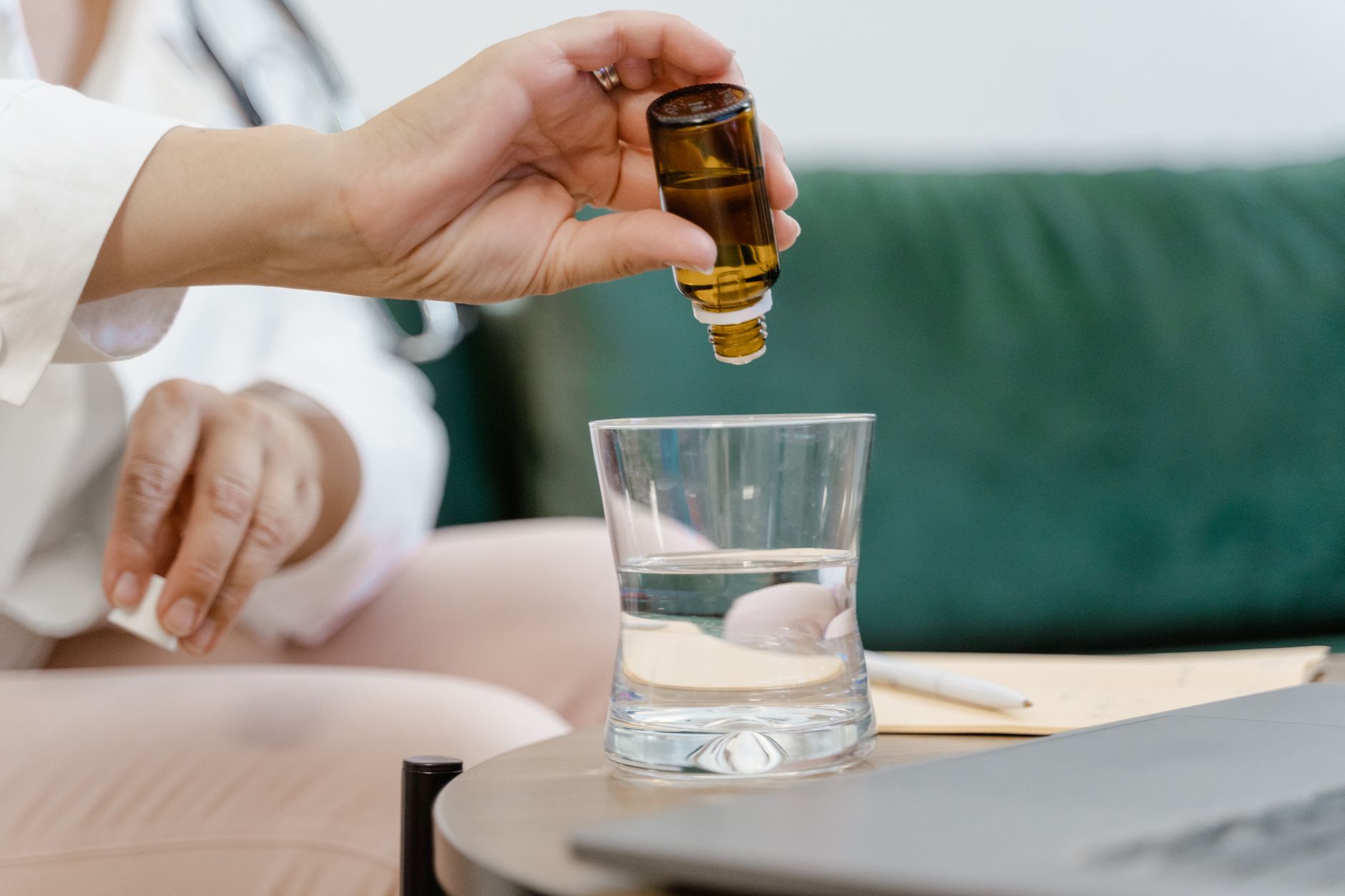
Is Rescue Remedy, the Bach flower complex, effective: the question often comes up among people discovering this floral blend sold in pharmacies and health food shops to accompany moments of passing tension. Made of five floral essences according to the method developed by Dr Edward Bach in the 1930s, Rescue Remedy belongs to a wellbeing tradition more than a century old, without recognition from conventional medicine. This article presents what the blend actually contains, what the scientific literature says about its effectiveness, the situations where it is traditionally used, and the precautions worth knowing before trying it.
What is Rescue Remedy, the Bach flower complex
Rescue Remedy is the name given to a blend of five floral essences chosen by Dr Bach to accompany moments of passing emotional tension, whether an exam, a public speech or a stressful event. It differs from the 38 individual essences of the Bach method through its general-purpose intent: it does not target one specific emotion, but a state of shock or passing tension, whatever its origin.
It is most often found as drops to dilute in a little water, but also as a spray, pastilles or a cream for local application. Like the other Bach preparations, it is obtained by macerating flowers in spring water, then preserved, for some versions, in a small amount of alcohol, which explains the existence of alcohol-free variants for people who wish to avoid it.
The five floral essences that make up Rescue Remedy
The blend combines five specific essences, each traditionally linked by Dr Bach’s method to a particular facet of shock or tension.
| Essence | Traditional association |
|---|---|
| Star of Bethlehem | Shock, trauma |
| Rock Rose | Intense fear, panic |
| Impatiens | Impatience, nervous tension |
| Cherry Plum | Loss of self-control |
| Clematis | A sense of dissociation, of being far away |
This combination of five essences explains the name given to the blend, designed to accompany a set of feelings that often arise together during a moment of tension rather than a single isolated emotion.
Is Rescue Remedy effective? What the scientific literature says
The question of Rescue Remedy’s effectiveness, and of Bach flowers more broadly, comes up regularly in work on complementary medicine. Two points emerge consistently from published research on the topic.
No clinical proof demonstrated to date
Double-blind clinical trials on Bach flowers have not shown any effect beyond placebo on anxiety or stress, whichever essence was tested. This absence of scientific proof does not mean that people who use Rescue Remedy feel nothing, but that no measurable mechanism of action has been isolated beyond the placebo effect. Bach flowers are, moreover, not classified as a medicine in most countries, but as a food supplement or wellbeing product depending on their formulation.
The placebo effect, a frequently cited explanation
The placebo effect, well documented in medical research, describes an improvement felt by a person taking a product they believe to be effective, independently of any pharmacological action from the product itself. The ritual associated with taking Rescue Remedy, such as counting out the drops or breathing calmly before taking them, may itself contribute to a feeling of calm, without this reflecting any specific action of the floral essences. This distinction explains why Rescue Remedy is presented as a comfort companion rather than a treatment, and why it should never replace medical care in the case of an established anxiety disorder.
This absence of proof is not for lack of scientific interest in the subject: Bach flowers have been the subject of several reviews of research over the decades, regularly taken up by health authorities in different countries. These reviews consistently conclude that there is no demonstrated effect beyond placebo, which places Rescue Remedy in the category of wellbeing practices rather than validated treatments. This conclusion has not prevented the product from being widely sold, as it remains freely available in pharmacies and specialist shops as a food supplement.
When is Rescue Remedy traditionally used
Rescue Remedy is most often mentioned for moments of identifiable, passing tension: before an exam, a public speech, a dreaded flight, or following an emotional shock such as bad news or a minor accident. Its use fits a logic of immediate comfort rather than a protocol followed over time.
Some people also turn to it during longer periods of upheaval, such as a house move or a stretch of closely spaced exams, alongside appropriate support when the situation calls for it. The choice of when to take it remains a personal decision, without a scientifically validated protocol, and benefits from being considered alongside underlying habits such as those presented in our article on teenage anxiety, when the tension particularly concerns a young person.
Rescue Remedy for children and pets
Versions of Rescue Remedy exist for children and for pets, generally alcohol-free and formulated differently from the adult version. These products follow the same traditional logic as the original, designed to accompany a moment of passing tension rather than to treat an established disorder.
For children as for pets, the lack of scientific proof of effectiveness applies in the same way as for adults, and a paediatrician’s or vet’s advice remains the reference point in the case of persistent behavioural issues. Alcohol-free versions, like those mentioned in our guide on Bach flowers and breastfeeding, are also preferred by new mothers who wish to limit their exposure to alcohol during this period.
How to use Rescue Remedy day to day
Using Rescue Remedy follows the same principles as other Bach preparations: a few drops taken directly under the tongue or diluted in a little water, following the precise instructions on the manufacturer’s leaflet, which vary from one format to another. The spray version allows for a quick dose without dilution, while pastilles suit situations where water is not available.
Some people prepare a small dilution bottle to keep in their bag, for discreet use the moment tension arises. Others keep Rescue Remedy for occasional use, at the precise moment of a situation identified as stressful. Neither habit is presented as superior to the other in the floral tradition, the choice being a matter of personal preference and the manufacturer’s instructions. This logic of occasional comfort echoes the one described for Holly, the Bach flower essence associated with jealousy, another essence from the same method.
The choice of format also depends on the context of use: a bottle of drops suits a calm moment at home or at the office, while a spray or pastilles suit an unexpected situation, on public transport or before an appointment. Each manufacturer’s leaflet states the recommended maximum frequency and the groups for whom particular care is needed, a reading worth doing systematically before any regular use.
Precautions and limits to know before using Rescue Remedy
Rescue Remedy never replaces medical or psychological care, particularly when anxiety or sleep trouble becomes frequent, intense or long-lasting. Versions containing alcohol deserve particular attention for pregnant or breastfeeding women, children and people on treatment incompatible with alcohol, which is why alcohol-free formulations are now widely available.
A pharmacist’s advice remains useful before any regular use, particularly when on other treatment or in case of doubt about a product’s composition. Keeping a measured view of what this tradition can offer, without excessive expectations of a therapeutic effect, remains the best way to approach Rescue Remedy with a clear mind.
When passing tension turns into established anxiety, recurring sleep trouble or lasting exhaustion, seeing a doctor or psychologist remains the most appropriate course of action, whatever interest one may otherwise have in this floral tradition. Rescue Remedy may, for some people, accompany an identified difficult moment, but it is never a response to a disorder that requires diagnosis and professional follow-up.