
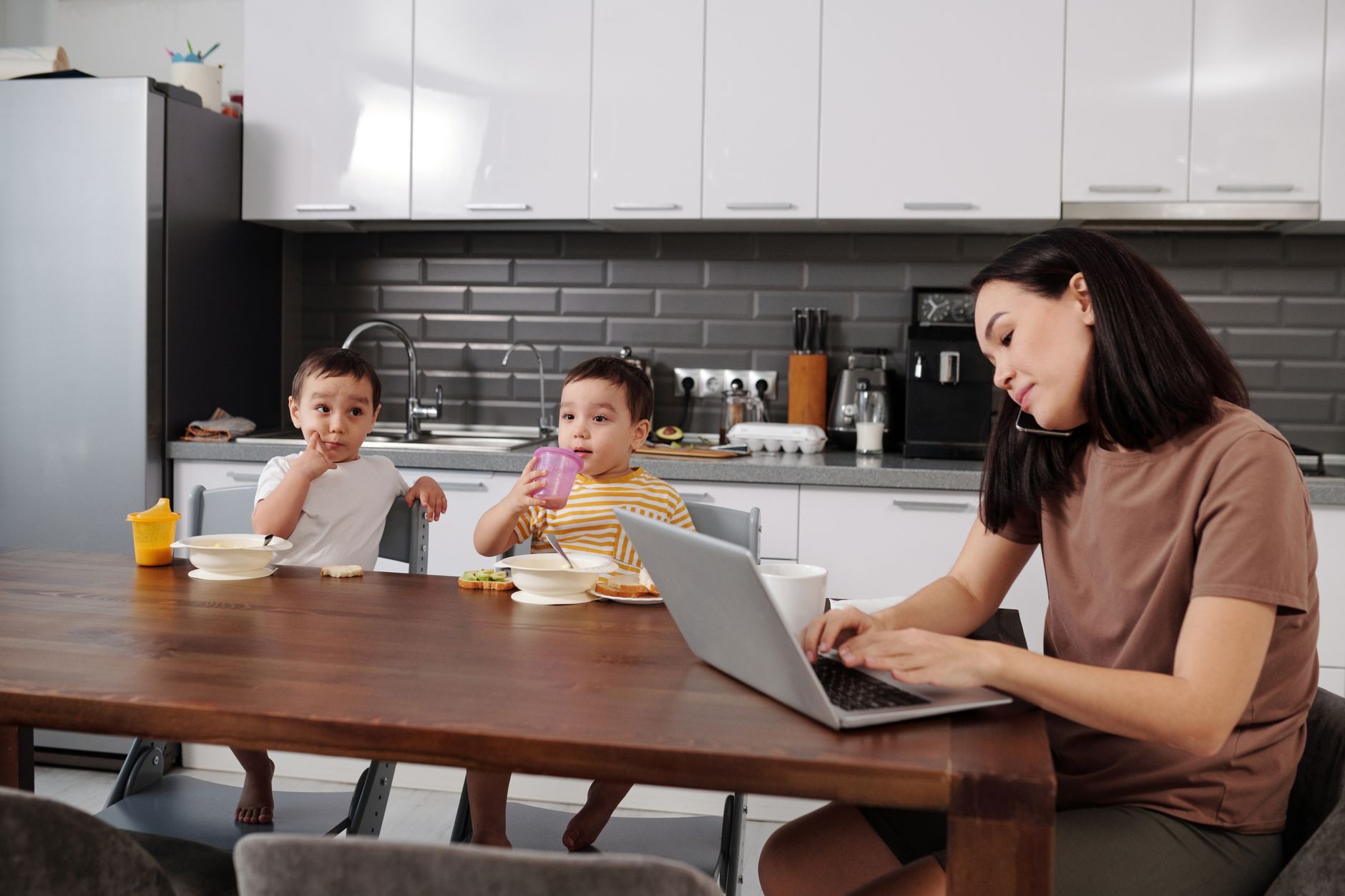
Mental load refers to the thinking, anticipating and quiet organising that fills a mother’s mind, well beyond the visible tasks of daily life. Between managing appointments, anticipating children’s needs and coordinating the household, this load stays largely invisible, even though it weighs on available energy and on the quality of sleep. This guide looks at what mental load in mothers actually covers, its main causes, the signs of an overload that has settled in, and practical ways to share it more evenly day to day.
Mental load in mothers: a quick overview
| Dimension | What it covers | A simple lever |
|---|---|---|
| Anticipation | Clothing sizes, vaccinations, birthdays, back to school | A shared family calendar, checked by both parents |
| Organising | Appointments, weekly meals, activities, last-minute changes | Blocks of responsibility assigned in advance |
| Emotional load | Tears, arguments, the household’s overall mood to soothe | Short but regular breaks |
| The couple’s invisible load | Still having to “give instructions” even when the other helps | End-to-end sharing, not just carrying out tasks |
What is mental load in mothers?
Mental load is not limited to physically carrying out household or parenting tasks: it mostly lies in the invisible effort of anticipating, organising and planning that comes before them. Knowing that the next clothing size needs to be bought, noting an upcoming vaccination, remembering a classmate’s birthday present, or checking whether there is still milk in the fridge all belong to this same ongoing watchfulness, even when no concrete task is actually being carried out at that moment.
This load differs from plain physical tiredness through its constant nature: it keeps running during a commute, a meeting or at night, as thoughts that keep coming back. Several surveys carried out among parents in recent years, in France in particular, consistently place the share of household and parenting tasks carried by mothers well above that carried by fathers, mental load included. A large majority of the mothers surveyed in these studies report being affected by this load, far more than the share of fathers who say the same.
Where does this everyday mental load come from?
Several mechanisms combine to explain why this load more often falls on mothers. The first lies in a historical division of roles within the household, where overall coordination (thinking of, organising, anticipating) stays associated with the mother, even as the execution of tasks is shared more evenly than before.
The second mechanism, often described as the “just ask” trap, comes from the fact that, even when a partner takes an active part, it is still very often the mother who has to identify what needs doing, put it into words and check it gets done. This “household manager” role, distinct from carrying out the task itself, concentrates most of the mental load.
The build-up of small decisions also plays a part: a young child, or several children of different ages, multiply the points of simultaneous watchfulness, for instance when one child goes through a phase of crying frequently for no obvious reason while another struggles to cope with separation at the school gate. Working from home, which sometimes blurs the line between work and family time, can add further demands to manage at the same moment.
Certain situations make this even more pronounced: a single-parent family carries the entire coordination alone, with no second parent present day to day to share it with; moving house, returning to work, or a child starting nursery or school all add, for a limited time, an extra layer of errands and decisions to anticipate, before a new routine settles in.
Recognising the signs of too heavy a mental load
Several signals, when they settle in over time, are worth taking seriously. Fatigue that does not improve despite enough sleep is among the most common, along with unusual irritability over minor setbacks. Repeated forgetfulness, even over things usually well handled, often reflects a mental overload rather than a genuine lack of organisation.
The feeling of never getting to the end of a to-do list, even after a full day, is another common indicator. When a child is going through a difficult phase at the same time, such as repeated nightmares disrupting their nights, a mother’s own tiredness is often compounded, as one person’s broken sleep directly affects the other’s.
A loss of interest in activities once enjoyed, a tendency to withdraw, or more frequent tension within the couple complete this picture. Taken individually, these signs remain common in a parent’s life; their build-up and persistence over several weeks, however, are good reasons to talk about it, including with a health professional if the fatigue becomes overwhelming.
Practical levers to ease it day to day
Centralising family logistics in a shared tool, checked by both parents, helps move part of the anticipation out of the mother’s head alone. A joint calendar for appointments, activities and school deadlines reduces the need to remember everything and to relay it all out loud.
Sharing complete blocks of responsibility, rather than isolated tasks, changes the nature of the sharing altogether: handing over the entire follow-up of the week’s meals, or of medical appointments, includes the anticipation and the decisions, not just the one-off execution of an instruction received.
Grouping decisions to anticipate into a single moment each week, for example a short weekly check-in between parents, stops every logistical matter from popping up as it goes and occupying the mind continuously. Involving children, according to their age, in simple and rewarding tasks also helps lighten the overall load while nurturing their independence, a dynamic close to the one that helps build self-esteem in children.
Setting clear boundaries between work and family time, especially when working from home, also helps avoid stacking both sources of demand onto the same time slot: constantly checking work messages while children need immediate attention adds far more to the mental load than a clearer alternation between the two.
Finally, allowing short but regular breaks, rather than waiting for a longer and hypothetical moment of rest, helps keep fatigue from building up without limit. Accepting that a delegated task gets done differently, without taking it back over, remains a necessary condition for real sharing to settle in over time.
Putting mental load back on the table as a couple
Naming precisely what belongs to anticipating and organising, not just to carrying out a task, is a first step towards making visible what was not before. Listing together, with a clear head, the invisible decisions made in a typical week (thinking of clothes, anticipating an appointment, remembering a birthday) often helps measure concretely the gap between the two parents.
Sharing an entire area end to end, rather than continuing to hand out one-off instructions, helps lighten this coordinating role for good: whoever takes on an area also takes on the anticipation and the decisions that come with it, without waiting to be told. Revisiting this sharing regularly, as the family’s needs change, keeps it from settling back onto a single parent.
This rebalancing takes time and repeated adjustments rather than a one-off change. Combined with simple everyday levers and attention to the first signs of lasting fatigue, it helps turn a load long carried alone into an organisation that is genuinely shared.